The Roots of a Spanish Icon: More Than Just a Fried Snack
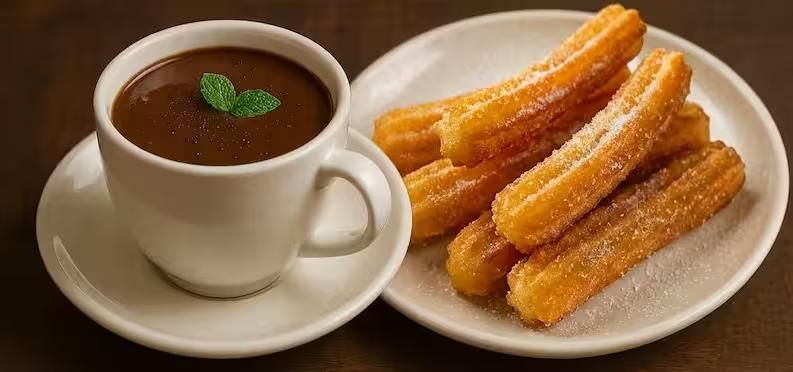
When you think of Spain, images of flamenco, ancient castles, and Mediterranean beaches usually come to mind. But for us Spaniards—and increasingly for food lovers around the world—one of the most cherished symbols of our culture is the humble churro. Paired with thick, velvety hot chocolate, churros represent comfort, tradition, and centuries of culinary heritage.
The story of the churro is as rich as the chocolate itself. This beloved staple stretches back to the nomadic shepherds of medieval Spain. They needed a portable, easy-to-make source of energy that could sustain them during long months in the mountains with their flocks. Since they couldn't carry fresh bread, they developed a fried dough that was crispy on the outside and soft on the inside—the perfect traveling companion.
A Legacy of Innovation
Churros are a distinctly Spanish creation, born from the refinement of deep-frying techniques that arrived in the Iberian Peninsula during the Arab occupation. While the Moors introduced the concept of frying in oil, it was Spanish cooks who perfected the craft, adapting it to local oils and ingredients.
Our mastery of this technique was so refined that it influenced culinary traditions across the globe. Even Japan's famous tempura traces its roots back to the frying traditions introduced by Spanish and Portuguese sailors in the 16th century. By the 1700s, churros were deeply embedded in the culture of Madrid and Andalusia, establishing Spain as the world leader in this culinary art.
Basic Recipe for Spanish Churros (Serves 4)
A Personal Note: Life, Milk, and the Family Farm
The traditional recipe I'm sharing with you is the one I made countless times as a child in rural Galicia. Back then, we adapted based on what we had. Some days it was just water and flour. Other times, if we could spare it, we used a 50/50 mix of water and milk.
Milk was a precious resource. My family, like many small farmers, kept about 5 to 10 head of cattle, but only one or two produced enough milk for us to consume. That milk often represented the only "cash income" my family had to survive. Whether we had milk in our churros or not depended entirely on how the dairy cows were doing that week. It taught me early on that food is about resourcefulness, adaptation, and making the most of what you have.
⚠️ CRITICAL SAFETY WARNING: Respect the Oil
Deep-frying churros is inherently dangerous. If the dough is not prepared perfectly—if it contains tiny air pockets or is compressed incorrectly—the churros will violently explode when they hit the hot oil.
This is not a theory. It is a well-documented danger in Spanish kitchens. The force is extreme: boiling oil can shoot out in all directions, reaching several meters and causing severe, life-altering burns. Many people in Spain carry scars from churro-related accidents from their childhood.
CRITICAL ADVICE: When adding churros to the oil, you must IMMEDIATELY step back. Do not stand over the pot watching them fry. A single explosion can cause severe facial burns in an instant. If you choose to try this at home, use professional equipment, wear protective clothing, and keep children and pets far away from the kitchen.
Ingredients
- 1 cup all-purpose flour
- 1 cup water
- 1/2 tsp salt
- 1/2 tsp sugar
- Oil for deep frying (high-quality vegetable or sunflower)
- Granulated sugar for coating
- Ground cinnamon (optional)
Instructions
- The Dough: Bring water to a boil in a saucepan. Add salt and sugar, then gradually stir in the flour until you have a thick, smooth dough. Ensure there are NO air pockets left.
- The Oil: Heat oil in a deep fryer or heavy pot to 350°F (175°C). Temperature is key: too hot and they burn; too cool and they get greasy.
- The Frying: Use a churrera (churro maker) or a sturdy piping bag with a large star tip. Pipe 6-inch lengths directly into the oil. Fry for about 2 minutes per side until golden. Step back immediately after piping.
- The Finish: Drain on paper towels and coat with sugar and cinnamon while still warm.
The Secret to the Perfect Chocolate
Regular cocoa won't do. For proper "dunking," you need body and texture.
The Pro Move: Buy chocolate labeled "para churros" in any Spanish supermarket. It's formulated to thicken perfectly.
Susana's Custom Recipe:
- 1 liter whole milk
- 100g dark bitter chocolate (melted in)
- 20g cornstarch (to thicken)
- A cinnamon stick and... a pinch of black pepper
The pepper is a Spanish tradition; it adds a sophisticated depth and "kick" that cuts through the richness.
Honesty About Our Churros: Our Partnership with Local Artisans
Let's be honest: we do not make our churros from scratch in-house.
As a small, family-run business, we don't have the specialized industrial equipment required to produce churros with the absolute safety and consistency they demand. Given the risks of explosion we mentioned earlier, we believe it is more responsible to leave the dough production to the masters.
Instead, we partner with one of the most prestigious bakeries in Santiago de Compostela. They provide us with high-quality, artisanal churros that we then fry fresh to order. This allows us to serve them piping hot while guaranteeing the quality and safety that only a master baker with decades of experience can provide.
Rather than pretending to make everything ourselves, we choose to support and work with skilled local artisans who share our values. The taste you enjoy at Señarís comes from this partnership with local excellence.
Visit Us for an Authentic Experience
Located right next to the Seminario Menor in Santiago, we serve our chocolate and churros the traditional way. Whether you are a pilgrim finishing the Camino or a local neighbor, our doors are open for a real Spanish breakfast.
Note: Our churros are only available for dine-in or walk-in takeaway. We do not offer delivery or phone reservations for churros—they are best enjoyed within the first few minutes, fresh and warm!
Made with love by Susana & Antonio
Hamburguesería Señarís - Click here for location and hours