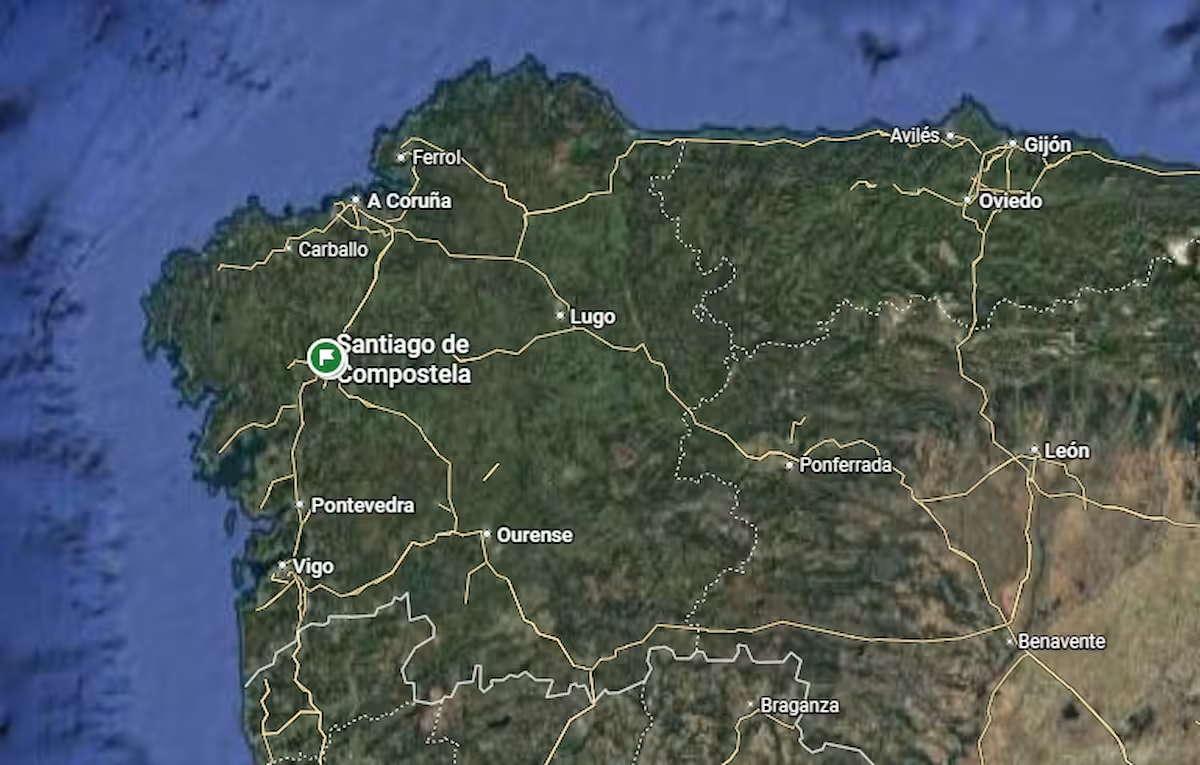
Galicia is a land rich in traditions and celebrations. Whilst in our previous article we covered gastronomic festivals, today I'm focusing on the cultural and traditional festivals that define the character of our cities and towns. I've been fortunate to experience many of these celebrations over the years, and today I'm sharing with you a complete guide for 2026.
⚠️ Practical Tip: Accommodation and Transport
For the most popular festivals, especially in July and August, make sure you've booked accommodation. Though it doesn't necessarily have to be at the event location: you can use public transport from one city to another or a nearby town. This way, apart from saving money, you might avoid accommodation problems. Galicia has a good network of buses and trains connecting the main towns.
⚠️ Important: Tentative Dates
The exact dates of many festivals are confirmed a few months in advance. We're giving you the usual dates based on previous years, but we recommend checking official websites when the date approaches. Most are celebrated on weekends near the indicated dates.
Major Festivals in Galicia's 7 Main Cities
Each of Galicia's main cities has its own major festivals, combining tradition, culture and community celebration. Here are the most important ones for 2026:
🏙️ A Coruña - María Pita Festivals
When: Celebrated throughout August, with the "Big Week" usually starting from the first full Sunday of the month.
What to expect: Concerts, cultural activities, fairs, fireworks and traditional events in honour of the Coruñan heroine who defended the city from the English in 1589.
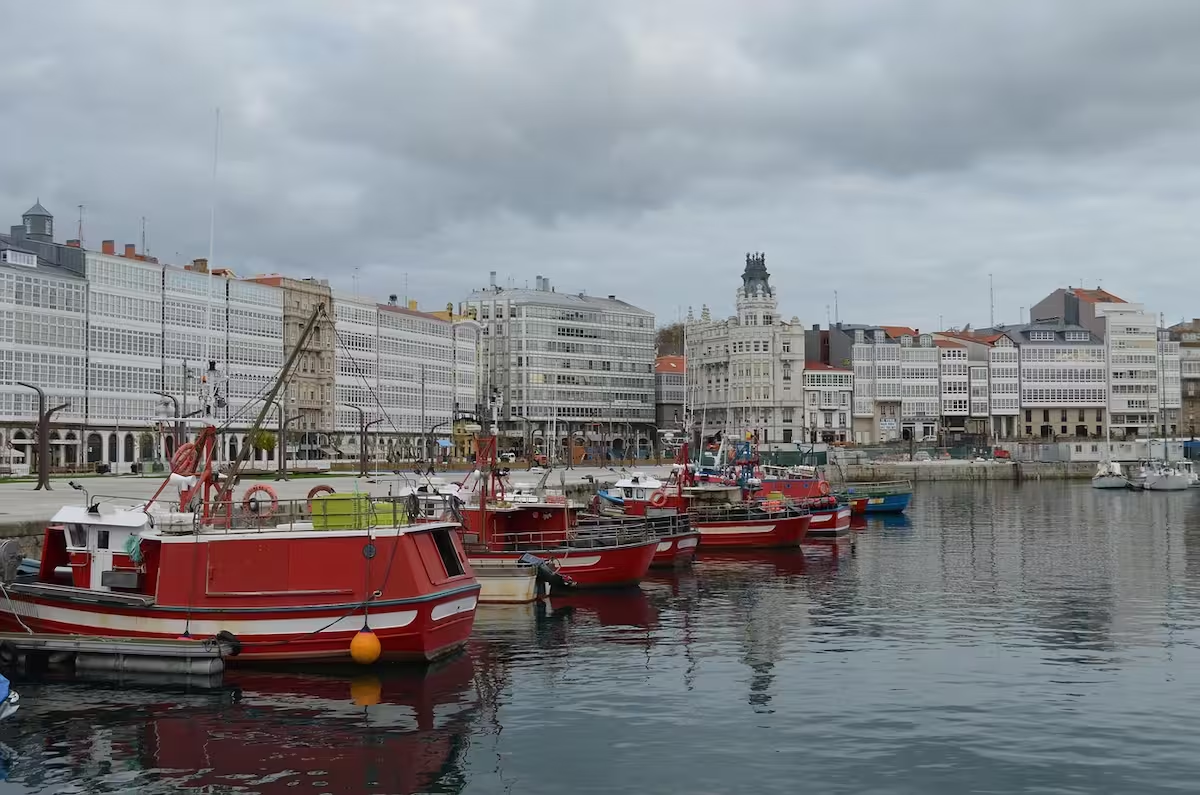
I especially remember the concerts in María Pita Square and the festive atmosphere in Méndez Núñez gardens. But what strikes me most each year is getting lost along the seafront promenade at sunset - with its several kilometres of route, you need time, but when the weather's good, the sea, the breeze and the people create a unique spectacle.
At that time it's common to see some giant cruise ship moored in the port, and you notice it in the city centre streets: you hear lots of English, German and other languages mixing with Galician. Besides the music and street parties, there are usually book fairs and cultural events that enrich the experience beyond the pure celebration.
And the nights... they're a proper treat wandering through the Old Town or around Atocha, sampling wines in its traditional taverns and bars. My recommendation for these festivals is clear: spend several days in the city and live it intensely, both day and night. So prepare strong coffee and good legs to keep up with the Coruñan pace in August.
🌊 Vigo - Reconquista Festival
When: Commemorates the expulsion of Napoleonic troops. The key day is 28th March (local holiday), with a major historical market and re-enactments.
What to expect: Historical re-enactment, craft market, traditional gastronomy and cultural activities that transport you to 1809 Vigo.
I must confess it's been many years since I last went, so everything's probably changed since my last visit. Back then, what struck me most was the re-enactment of the era of the uprising against Napoleon's French forces. Hundreds of 'Napoleonic soldiers' walk the streets playing the bagpipes, with bands simulating military marches - a re-enactment that, given the number of participants, costumes and setting, is truly unmatched in Galicia.
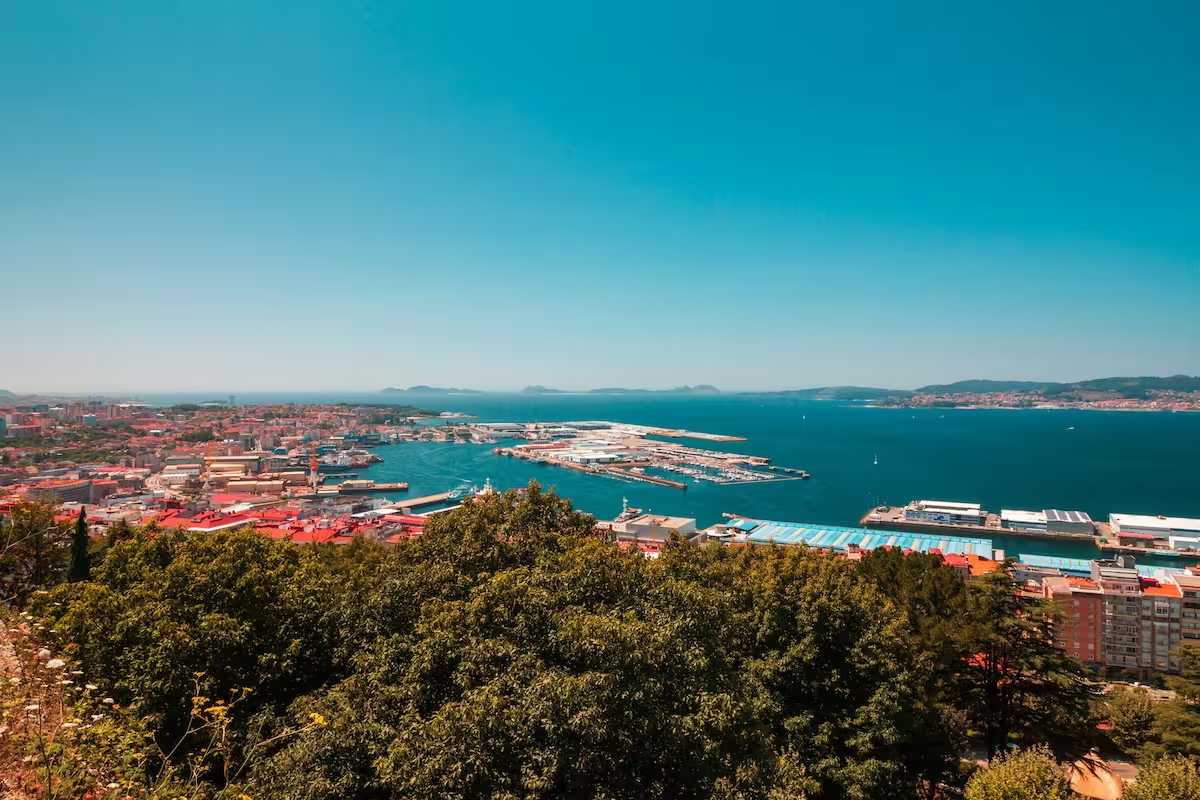
And of course, there's the other thing: eating fresh oysters in the Berbés quarter, which during the festivals becomes a hive of stalls and atmosphere. Vigo is Galicia's largest city, so you'll also need several days to see the city at leisure and enjoy its festivals as they deserve. The atmosphere in the Casco Vello during those days is something that, even as time passes, I'm sure remains magical.
⛪ Santiago de Compostela - Festivities of Apostle Santiago
When: The patron saint festivals extend during the second fortnight of July. The main day is 25th July (Galicia's National Day, regional holiday).
What to expect: Fireworks, concerts, religious events, medieval markets and the famous offering to the Apostle.
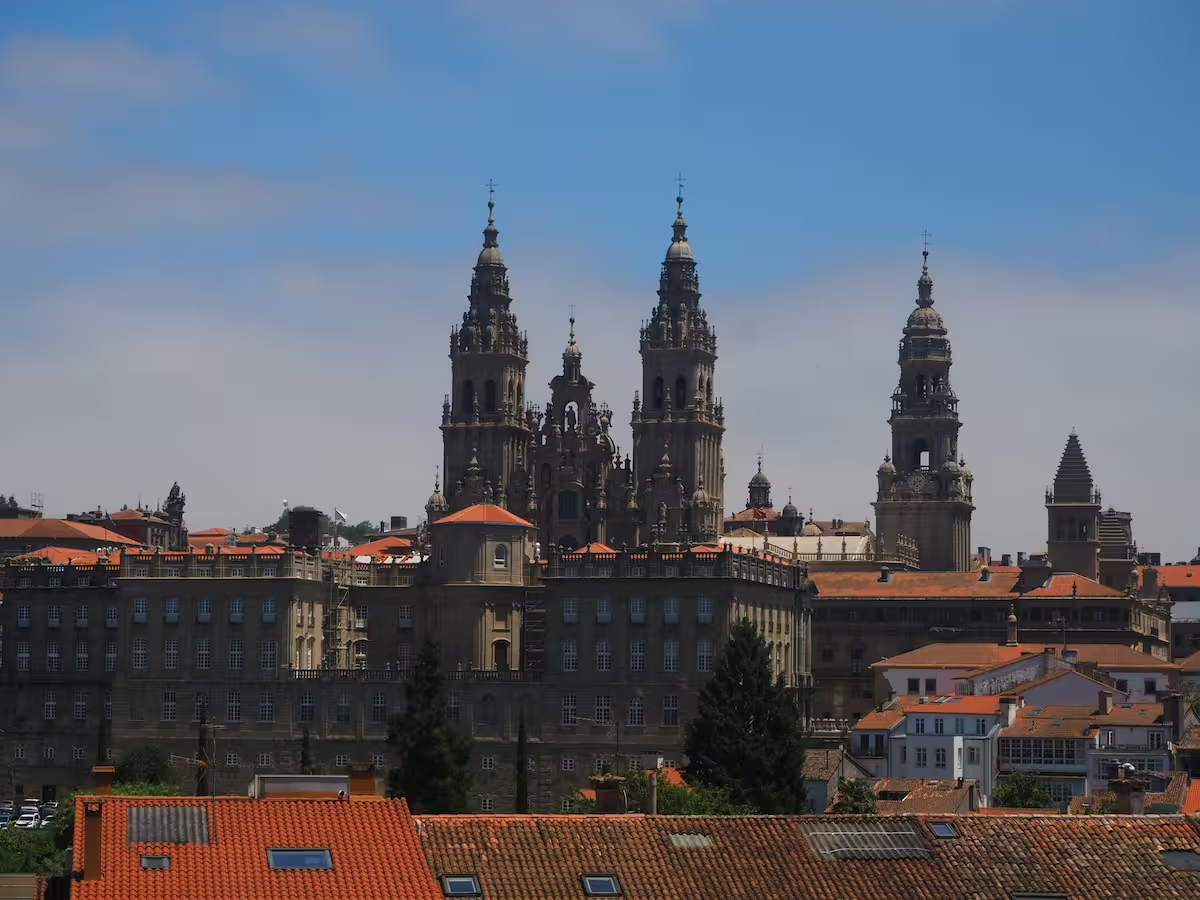
Experiencing the Apostle's festivities in Santiago is something unique, though you need to go with some preparation. Bear in mind that, whilst it's Santiago's big celebration, it's actually the festival for all Galicians, so the crowds are immense. Getting through the old town streets becomes exhausting amongst so many people. I'd even say it's not a day for wandering with young children in those places, as you'll need eight eyes not to lose sight of them in the crowd. So I'd almost dare say that, if you come with young kids, better stick to the outskirts of the old town.
The night of the 25th is a spectacular show of music and attractions in Alameda park worth seeing. And of course, the fireworks on the night of the 24th. We're lucky to have our place near Belvís park, where you can see them spectacularly, and even more so in recent years when the fireworks are launched from Monte do Gozo and not from the cathedral façade to avoid damaging the millenary stone.
Santiago is a small city but very rich in history and culture, so you'll need several days to see the city at leisure and enjoy the festivals without stress.
🏛️ Pontevedra - Peregrina Festivals
When: Celebrated in the second week of August, with the second Sunday of August being the main day.
What to expect: Religious processions, concerts, street parties, children's activities and the traditional floral offering to the Virgin Peregrina.
To be honest, the Peregrina festivals have one very clear memory for me: I end up absolutely plastered from drinking so much wine. By far of all Galicia's festivals, it's the one that most invites you to enjoy the Albariño and local wines in its numerous taverns and stalls. The atmosphere is great fun, lively and full of energy, I'd even say it's a festival with an atmosphere that rejuvenates - there's always a mix of generations, but the vitality is contagious.
Culturally, beyond the drinks, it has much to offer. The religious character is noticeable in the Virgin Peregrina procession, but what really marks the festival are the concerts. Every year they usually bring nationally and internationally famous artists to the stages scattered around the city. It's a festival you can feel the locals' pride in, filling their medieval squares with music and joy.
My cultural tip: don't miss the concerts in Herrería square or next to San Francisco convent, and if you want the full experience, alternate the wine route with visits to the craft stalls they set up in the historic centre. Pontevedra in August is pure classy celebration.
🧱 Lugo - San Froilán Festivals
When: Take place during the week of 5th October, with 5th October being the local holiday.
What to expect: Livestock fair, concerts, cultural activities and the famous "San Froilán Fair" with typical local produce.
San Froilán is one of my favourite festivals. The livestock fair is impressive, and the concerts in the Main Square are always top quality. Plus, Lugo dresses up for the whole week.
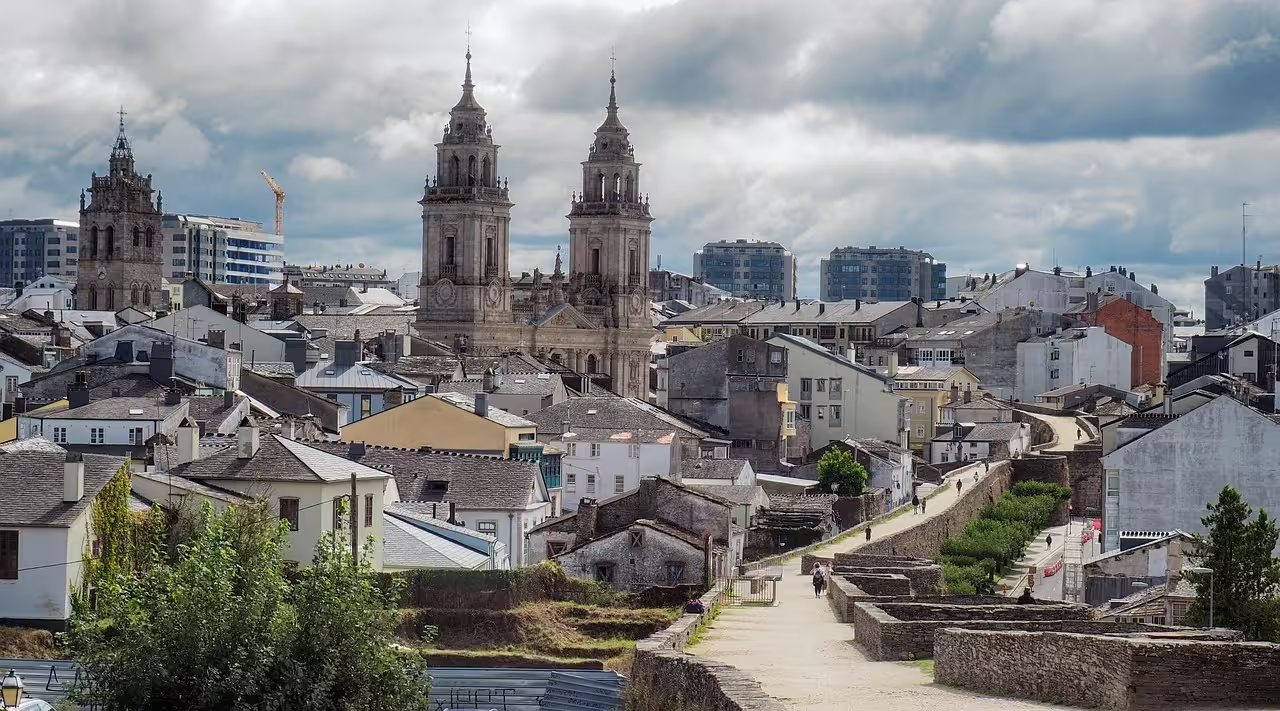
It's essential to go early and spend the whole day in the city to really experience it. Walking along Lugo's Roman wall is a unique experience - when I last went, about 6 or 7 years ago, it was under works and you couldn't walk all the way round the wall. Now I imagine you can, and the views from up there are privileged: you can see the whole historic city and the surrounding province.
Mind you, a practical tip: bring a coat because Lugo in October can be quite a cold city, especially in the evenings and nights... and perhaps an umbrella, in case the autumn rains decide to make an appearance. Better safe than sorry whilst enjoying the octopus restaurants and concerts.
♨️ Ourense - San Martiño Festivals
When: The main festivity is 11th November (local holiday in the capital).
What to expect: Gastronomic fairs (especially the magosto - roasted chestnuts), concerts, traditional markets and cultural activities.
San Martiño in Ourense is synonymous with magosto. Though I've never been personally to this festival, from what customers at the restaurant and friends from the area tell me, I know that the afternoons centre on the magosto ritual: roasted chestnuts and new wine.
From what they tell me, it's essential to go well prepared: coat and umbrella are must-haves in November in Ourense. What they highlight most is getting lost in the traditional markets to try the new wine from the Sil lands, a real seasonal delicacy.
The atmosphere seems to be more family-oriented and gastronomic than festive in the sense of big concerts, focusing on celebrating the harvest and the start of winter with good food, good wine and company. And many agree that the outdoor thermal baths are the perfect complement to end the day. Sounds like the perfect plan for an autumn weekend.
⚓ Ferrol - Dolores Festivals and Holy Week
When: The patron saint's day is 15th September (local holiday). Holy Week (29th March to 5th April 2026) is of International Tourist Interest.
What to expect: Religious processions, concerts, cultural activities and, in Holy Week, the impressive processions declared of International Tourist Interest.
To be honest, I haven't personally been to Ferrol's Holy Week since I was a child. It's a city that, for those of us living in Santiago, is quite out of the way and with the rush at the restaurant, I haven't managed to go back. However, it's a festival I'm always asked about.
From what I've researched and what customers at the restaurant who do go tell me, what strikes most is the solemnity and scale of the celebration. Ferrol lives its Holy Week with unique intensity, declared of International Tourist Interest. People talk about an eight-day experience with more than twenty processions that completely transform the historic Magdalena Quarter, filling it with sacred music, the sound of drums and the dragging of chains by penitents.
It's an event that moves the entire city and attracts hundreds of thousands of visitors, to the point where prestigious guides have placed it among the most outstanding in Spain for its beauty and tradition. Though I can't give advice from recent experience, everything suggests that to fully live it, like the great festivals, you need time: to let yourself be carried away by the atmosphere in the streets, to try the gastronomy in the packed bars and, of course, to go prepared with a good coat in case typical Galician weather decides to play up.
Each city has its own character and traditions. I recommend visiting at least two or three of these festivals to appreciate Galicia's cultural diversity.
Festivals of International or Cultural Significance in Galician Towns (2026)
These events stand out for their uniqueness, historical re-enactment and recognition beyond Galician borders:
🛡️ Viking Landing (Catoira)
When: Declared of International Tourist Interest, it re-enacts the pirate assault on the Torres do Oeste fortress. Celebrated on the first Sunday of August (2nd August 2026).
What to expect: Historical re-enactment with Viking ships, simulated battles, medieval market and traditional gastronomy.
Catoira's Viking Landing is a festival that won't leave you indifferent. Seeing the longships approaching through the estuary and the simulated battle is something you don't forget. Prepare to share wine skins with the Vikings, because during the celebration it's common to end up "soaked in wine, water and mud".
My key recommendation is to go very, very early. It's a massive celebration that attracts thousands of people, and each year it gets more popular. The main event, the landing, takes place on the first Sunday of August early afternoon, between 12:30 and 13:00, at the historic site of the Torres de Oeste. To get a good spot with views, it's advisable to arrive at least a couple of hours in advance.
Once there, the atmosphere is unmatched. The day starts around 10 in the morning with traditional music through the streets and a medieval market. The "Vikings" aren't just extras: they're the people of Catoira themselves in costume. It's one of those unique festivals in Galicia that mixes history, fun and gastronomy, where sardine barbecues, octopus and empanada are shared in a spirit of brotherhood.
There are many important festivals in Galicia at this time, but this is a single-day event, concentrated and full of energy. It's the type of intense experience that, precisely because of its brevity, you can't afford to miss.
🐎 Rapa das Bestas (Sabucedo, A Estrada)
When: An ancestral and wild equestrian tradition consisting of cutting the manes of wild horses. Celebrated on the first weekend of July (from 3rd July 2026).
What to expect: Display of skill with wild horses, ancestral tradition and connection with Galician nature.
Sabucedo's Rapa das Bestas is a unique tradition, so singular that it attracts the attention of television networks from Japan and around the world. Though I haven't experienced it in person, from what I've researched and what those who go say, it's a unique event celebrated only once a year and it doesn't leave you indifferent.
It takes place during the first weekend of July (from Friday to Monday) and, indeed, you need to go very early. The most spectacular part is the "curro", where the "aloitadores" fight hand-to-hand with wild horses to immobilize them and cut their manes, all without using ropes or tools, only their hands. This is the main difference that makes Sabucedo's rapa famous compared to others.
The main events, the rapas, take place at 19:00 on Saturday and at 12:00 on Sunday and Monday. However, the festival starts much earlier. At 6:30 in the morning on Friday, mass is held in honour of San Lorenzo, followed by going up the mountain to look for the horses. So, if you want the full experience from dawn, you must get up early and plan to spend the whole day there. Being a small town, the atmosphere is intimate and the festival is experienced with great intensity, with music, small markets and communal meals throughout the weekend.
For those planning to go, a useful tip: entry to the curro to see the rapas is charged, and it's recommended to buy it in advance on their official website. It's one of Galicia's festivals declared of International Tourist Interest, so its fame is more than justified.
🏛️ Arde Lucus (Lugo)
When: Massive Roman historical re-enactment. In 2026 it takes place from 18th to 21st June.
What to expect: The whole city of Lugo transforms into a Roman city: citizens dressed as Romans, markets, gladiatorial shows and cultural activities.
Lugo's Arde Lucus is one of those visual festivals. If in Vigo it was the French, in Catoira the Vikings, here it's the Romans. It's a spectacle worthy of a film: hundreds of Romans, Castros people and legionaries parading along the World Heritage Wall, in a historical re-enactment that transports you to the era of the Caesars.
The key is to go early so you can wander at leisure among its emblematic spaces. You can't miss the "Macellum", the Roman market full of crafts and magic in the Main Square; the "Castra", a military camp with the wall as backdrop where Romans and Gallaeci tribes coexist; and the "Circus", the arena where exciting gladiator fights take place. With hundreds of activities and numerous re-enactment associations participating, every corner of the historic centre is a discovery.
For me it's a festival to savour with your senses: speaking and toasting with a "legionary", touching the fabrics of the tunics in the market, or hearing the sound of drums and Latin in the streets. The entire city, from schools to shops, gets involved to create this magic.
Mind you, to fully live it, bear in mind that it's celebrated over four intense days in mid-June. The programme is so complete that, whilst it has its party side, it's almost a cultural festival. Going just one day is like watching only the first episode of a great series. If you can, dedicate time to it and treat yourself to getting lost in its history.
🎭 Entroido (Carnival) in the "Magic Triangle" (Xinzo de Limia, Laza and Verín)
When: Spain's longest and most traditional carnival, with unique figures like the "pantallas" and "peliqueiros". Dates are variable (February/March), Shrove Tuesday is a local holiday in many of these municipalities.
What to expect: Traditional masks, parades, troupes and one of Europe's oldest and most authentic carnival traditions.
The Entroido of the Magic Triangle (Xinzo, Laza and Verín) is something you must experience at least once. I went to Verín's parade many years ago, but I have one clear impression: this isn't a festival to watch from the sidelines, but to participate, dress up and be part of the street spectacle.
What makes it unique are its mysterious traditional masks, which aren't simple costumes. In Xinzo de Limia there are the 'pantallas', with their white masks and brightly coloured costumes, whose role is to symbolically "whip" people with their bladders to scare away winter's bad mood. In Laza, the famous 'peliqueiros' with their colourful costumes, metal masks and cowbells, walk the streets in a ritual parade lasting several days. And in Verín, the 'cigarrones' with their typical masks and striped costumes maintain an atmosphere of constant celebration.
This is the big difference: whilst other carnivals are shows, here ritual and participation are the essence. It's said to be Spain's longest carnival, with almost forty days of celebration in Xinzo. The key dates are the weekends before Ash Wednesday, and the celebration culminates with large parades and traditional events on Carnival Sunday, Monday and Tuesday.
It's a deeply rooted carnival, not commercial, where locals keep centuries-old traditions alive. If you go, don't just go as a spectator. Put on a mask, join the troupe, walk the streets and let yourself be carried away by a rhythm and magic you won't find anywhere else.
⛵ The Arrival of the Caravel Pinta in Baiona
When: Commemorates the arrival of the caravel Pinta in Baiona with news of the discovery of America. Celebrated on the first weekend of March, coinciding with the 1st March local holiday.
What to expect: Historical re-enactment, medieval market, concerts and cultural activities related to the discovery of America.
Baiona's Arribada is one of those visual and historical festivals that transport you to another time. I just watched the re-enactment of the arrival, and that alone was enough to capture its essence. The re-enactment of the caravel Pinta touching land, the sound of cannons from the fortress, and the city converted into a 15th-century medieval town is impressive.
As always, the key is to arrive early. The day starts at 10:00 in the morning with the roar of Monterreal artillery, which marks the opening of the medieval market and activity programme. The market, which incidentally celebrates its 30th edition in 2026, stays open until midnight on Friday and Saturday, and until 22:00 on Sunday. This gives you plenty of scope for what I think is the perfect plan: see the main "Arribada" event in the afternoon (normally around 20:00) and then enjoy Baiona's magic at nightfall.
And here comes the masterstroke. After immersing yourself in history, you can switch off with a walk. Baiona offers you the perfect opportunity: getting lost along its seafront promenade, gazing at the illuminated bay, or popping into somewhere in the historic centre, which during those days breathes the same festive and welcoming atmosphere. It's the perfect combination between an intense cultural immersion and the simple pleasure of enjoying a charming seaside town.
🔥 San Xoán Bonfires (A Coruña, Riazor and Orzán beaches)
When: The shortest night of the year becomes a massive festival of fire and pyrotechnics on the beach, with thousands of people. The night of 23rd to 24th June (regional holiday).
What to expect: Bonfires on the beach, jumping over the fire, concerts, fireworks and the traditional burning of "meigallos" (spells) to ward off evil spirits.
The San Xoán Bonfires in A Coruña are magical because they're a festival you live, not watch. My experience is arriving at Riazor beach mid-afternoon, when it starts getting dark, armed with wine and soft drinks for the calimocho, and not returning until dawn, "plastered" from toasting so much with thousands of strangers who, for that night, become your best mates. What defines the night is that spirit of sharing: if you bring drink, perfect; if you run out, no worries, because everyone will invite you to jump their bonfire and share a drink.
The spectacle is constant. The dozens of small bonfires create a string of fire on the sand, whilst a barrage of fireworks from the Rotonda lights up the sky. The most symbolic moment is the burning of the great "San Juan Bonfire" at midnight, a cardboard structure that satirizes the year's events and is lit by the "Meigas". Watching it burn with the sea as backdrop is unforgettable.
But the festival goes beyond the beach. Days before, the neighbourhoods fill with the smell of grilled sardines at the "sardiñadas" and barbecues. To live it to the max, you need to arrive very early (from mid-afternoon) to secure a spot, as it attracts over 150,000 people. Mind you, remember the rules: no glass on the sand, no swimming in the sea after 22:00, and vacate the beach at 06:00 in the morning.
And the last drink isn't wine, it's magic: a good queimada. At the end of the night, seeing people gathered around the blue fire of this ritual drink, reciting the 'Conxuro' (the spell) against the meigas, is the perfect finishing touch. After all, better safe than sorry and make sure no spirit follows you home.
In short, it's a festival of International Tourist Interest that has everything: pagan tradition, visual spectacle, gastronomy and, above all, that spontaneous hospitality that turns strangers into party companions.
🏰 Festa da Historia de Ribadavia
When: Large-scale medieval setting that transforms the town. Celebrated on the last weekend of August (29th, 30th and 31st August 2026).
What to expect: Medieval market, tournaments, falconry displays, traditional music and period gastronomy.
This is one of the festivals I still have pending. From what I hear at the restaurant bar from those who have been to that cultural festival, it's one of those unique events in Galicia, where the line between spectator and participant completely blurs. The conversion of its medieval Jewish quarter into a living stage is the key. It takes place on the last weekend of August and since 1997 has been declared a Festival of National Tourist Interest.
The must-see event is watching the authentic re-enactment of a Jewish wedding (Sephardic wedding). There's also the Grand Parade of historical characters, which parades from the historic centre to the Sarmiento castle. Another unique activity is the living chess game, a chess match performed by people on a giant board.
To fully live it, there are two key tips. First, get yourself some maravedís, the official currency of the event. The second is to dare to wear period costume, because most activities, from the parade to the optional medieval meal, are designed for those dressed in medieval fashion. That total immersion, combined with the incomparable setting of the Jewish quarter and its gastronomy, is what customers highlight: it's not just watching a festival, it's living a day in history.
These internationally significant festivals usually attract many visitors. Plan ahead and check official programmes to avoid missing the most interesting events.
To help you plan your visit, here's a monthly summary of Galicia's main cultural festivals in 2026:
📅 February-March: Carnivals and Reconquista
Entroido (Magic Triangle): February/March (variable dates) Reconquista Festival (Vigo): 28th March Arrival of the Caravel Pinta (Baiona): First weekend of March
📅 March-April: Holy Week
Ferrol Holy Week: 29th March - 5th April (International Tourist Interest) Holy Week in other cities: Processions throughout Galicia
📅 June: San Xoán and Arde Lucus
San Xoán Bonfires (A Coruña): Night of 23rd to 24th June Arde Lucus (Lugo): 18th-21st June (International Tourist Interest)
📅 July: Summer Festivals
Rapa das Bestas (Sabucedo): First weekend (from 3rd July) Festivities of Apostle Santiago: Second fortnight of July (main day 25th July) María Pita Festivals (A Coruña): Begin in July and extend into August
📅 August: Top Festivals
María Pita Festivals (A Coruña): All August (Big Week first Sunday) Viking Landing (Catoira): First Sunday (2nd August) Peregrina Festivals (Pontevedra): Second week of August Festa da Historia (Ribadavia): Last weekend (29th-31st August)
📅 September-October: Festive Autumn
Dolores Festivals (Ferrol): 15th September San Froilán Festivals (Lugo): Week of 5th October San Martiño Festivals (Ourense): 11th November
After years attending these festivals, here are my tips for making the most of them:
Research the programme: Each festival has its official programme with times and events. Download it or check the council website.
Arrive with time: For the most popular events, arrive at least an hour early to get a good spot.
Respect the traditions: Some festivals have specific rituals. Watch and follow the locals.
Try the local gastronomy: Each festival has its gastronomic specialities. Don't miss them.
Use public transport: Parking is complicated during festivals. Better to use bus, train or taxi.
Dress comfortably: You're going to walk a lot and possibly stand for hours. Comfortable footwear is essential.
Look after the environment: Don't leave rubbish and use the designated bins.
My personal tip: choose 2-3 festivals that really interest you and dedicate time to them. It's better to fully enjoy a few than rush from one to another without being able to appreciate them.
🍽️ Need a Break Between Festivals?
Pop into our burger joint in Santiago. We'll tell you more about the festivals that aren't in the tourist guides and we'll prepare something delicious for you to recover your strength.
Galicia in 2026 offers an exceptional cultural calendar. With the celebration of the Holy Year Xacobeo, many of these festivals will have special prominence.
My final recommendation: Combine cultural festivals with tourism. For instance, you can visit Santiago during the Apostle's festivities and then tour the Costa da Morte. Or enjoy Arde Lucus in Lugo and then explore the Ribeira Sacra.
And remember: Galicia is much more than its festivals. Between celebrations, discover our landscapes, our gastronomy and our people. Tell us about your experiences at Galician cultural festivals - we love hearing the stories of those who travel our land. You'll find us here.
❓ Frequently Asked Questions About Galician Cultural Festivals
When are the María Pita Festivals in A Coruña 2026?
The María Pita Festivals in A Coruña are celebrated throughout August 2026, with the "Big Week" usually starting from the first full Sunday of the month. They're the city's major celebrations with concerts, cultural activities and traditional events.
What are the most important cultural festivals in Galicia?
The most important cultural festivals in Galicia are: the Festivities of Apostle Santiago (25th July, Galicia's National Day), the María Pita Festivals in A Coruña (August), the Reconquista Festival in Vigo (28th March) and internationally significant events like Arde Lucus in Lugo and the Viking Landing in Catoira.
Do I need to book accommodation for Galician cultural festivals?
Yes, especially for the most popular festivals in July and August, and for events like Arde Lucus in Lugo. We recommend booking in advance or finding accommodation in nearby towns well connected by public transport.
How do I get to Galician cultural festivals?
Galicia has an excellent public transport network. You can use intercity buses, Renfe trains, or hire a car for greater flexibility. The main festivals are well connected from Santiago de Compostela, A Coruña, Vigo and Pontevedra.
Are the dates for Galician cultural festivals 2026 definitive?
The dates indicated are the usual ones based on previous years. We recommend confirming on official websites of councils when the date approaches, as some may vary by a few days depending on the local festival calendar.