Spanish Tortilla: Between Culinary School and the Reality of a Local Bar
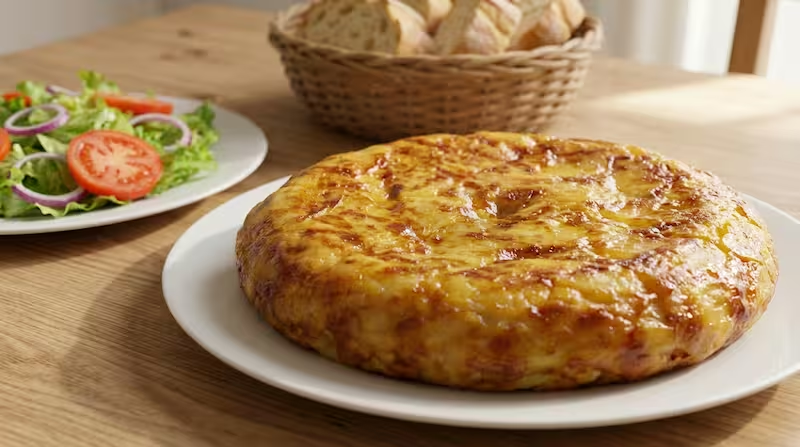
The Ideal Tortilla: What Culinary School Taught Me
Spanish tortilla de patatas seems like a simple dish, but it's one of the hardest to get right. In theory, it's just four ingredients: potatoes, eggs, olive oil, and salt. Then there's the "onion war"—at Señarís, we use it because it adds a necessary touch of freshness and sweetness. But beyond the ingredients, what matters is the technique and the context of the kitchen.
There is such a thing as a "top-tier" tortilla—the one I learned in culinary school. To reach that level of perfection, time is non-negotiable. Potatoes must be cut uniformly, 0.3 to 0.5 cm thick, and the oil must stay strictly between 80°C and 90°C (175°F - 195°F).
At that temperature, the potatoes cook slowly and release their starches, developing natural sweetness. When you add onions cooking at that same slow rhythm, you achieve perfect balance. But let's be real: that requires a level of patience that isn't always available in a busy professional kitchen.
The Salt Secret (Not All Salt is Created Equal)
If you think all salt is the same, you're dead wrong. In a tortilla, salt is everything, but so is its quality. I stay away from processed table salt—that 99% sodium chloride stuff that only raises your blood pressure and adds zero flavor.
In our kitchen, we use natural sun-dried coarse sea salt. It keeps its minerals intact, which add an earthy, deep undertone that changes the game. I wrote a whole post about salt because it's a world of its own, but for a good tortilla, natural salt is key.
Daily Life at Señarís: Antonio and the Service
That's the theory. Then there's the reality of our neighborhood bar here in Santiago de Compostela. We aren't machines, and we don't pretend to be. Antonio spends his mornings peeling and hand-cutting potatoes between serving coffees and pouring beers. We don't have buckets of pre-cut potatoes sitting around for days; if they don't sell, they become free "pinchos" (snacks) in the afternoon.
When an order for a tortilla or sandwich comes in, I (Susana) step into the kitchen. The customer is hungry, and I can't ask them to wait an hour for a slow confit. So I skip the thermometer and crank the oil up to 120°C or 150°C to get the job done. It's a balance: either you sacrifice that slow school technique, or you make the customer wait too long. I won't lie to you: some days it's runnier, some days it's firmer. That's life.
The Eggs: Regulations vs. Honesty
Let's talk about eggs. I grew up in a village, and I know for a fact that an egg from a hen pecking around a backyard has no rival. In my 50 years, I've never seen a farm egg go bad, but the law forbids us from using unlabeled eggs in a restaurant.
Then there's the math. If we used premium organic eggs in one of the most affordable tortillas in Santiago, we'd have to close our doors tomorrow. At Señarís, we're honest: we use standard supermarket eggs. It's the only way to keep prices fair and pay the bills.
The Recipe: Tortilla "The Rough Way" (But With Sense)
A personal note: No fancy grams or culinary school fluff—here is the recipe as I actually do it. This makes enough for about three large sandwiches or one full tortilla to share.
Ingredients
- 1 kg of potatoes: (Which becomes 800g after peeling, but the supermarket still charges you for the whole kilo).
- 12 medium eggs: Whatever you can afford (keeping in mind what I said about the math).
- 10g of salt: Coarse, natural sea salt if possible.
- 1 liter of Extra Virgin Olive Oil: For frying/confit.
- Half an onion: If you're on Team Onion (at Señarís, we always are).
The Process
1. Prep the Veggies
Peel and cut the potatoes into uniform slices (0.3 to 0.5 cm). Give them a quick rinse to remove surface starch so they don't stick together. Slice the onion into thin strips (julienne).
2. Efficient Confit
Throw the potatoes and onion into the pot with a pinch of salt (this speeds things up). Then pour the oil over them. We do it in this order to save oil and gas—because gas prices are through the roof.
The Heat: Start on medium-high. Once it bubbles in the center, drop it to the minimum. About 20 minutes of slow bubbling is ideal to bring out the natural sweetness.
3. The Soak: The Big Secret
While the veggies cook, beat the eggs in a bowl and let them sit. Once the potatoes are soft enough to break with a spoon, drain the oil well and let them cool slightly.
Pro Tip: If you throw boiling hot potatoes into raw eggs, the eggs scramble instantly and create a "film" that stops the salt from getting in. Let them cool until they are just warm, then mix gently. The potatoes should "float" in the egg.
4. The Salt Check
Add the rest of the salt. If it's coarse salt, wait a minute for it to dissolve and stir gently.
The Trick: The egg will turn a darker, more uniform color. Taste it. A good tortilla mix should taste slightly salty to the palate before it hits the pan.
5. Searing the Tortilla
Heat your pan. If it's iron, wait for a wisp of smoke. If using non-stick, avoid excessive heat to preserve the coating's durability and ensure clean cooking. Add a drop of sunflower oil (which handles direct pan heat better for searing), swirl it, and dump the excess.
Pour the mix in over medium heat. Don't stir it. When it's half-set, put a plate over the pan and turn the heat to minimum for a minute. That residual heat seals the top so when you flip it, the egg doesn't stick to the plate or explode all over your kitchen.
6. The Finish
Flip it and slide it back in.
Firm? Leave it longer on low heat. Runny (Betanzos style—barely set, with a creamy center)? High heat for a quick sear on the outside while keeping the center soft and luscious for dipping your bread in the yolk.
Too Much Work?
If all this sounds like a lot of peeling and pan-flipping, just come see us at Señarís. We'll have the coffee ready, Antonio will be cutting the potatoes, and I'll be in the kitchen ready to make a fresh one for you while you enjoy a beer. No fluff, no lies—just a real tortilla in the heart of Santiago. We're waiting for you!
With love, from the kitchen of Hamburguesería Señarís.