⚡ The Smart Way to Santiago: Porto — Complete 2026 Guide
📋 Table of Contents
- ✈️ The problem with flying to Madrid
- 🏙️ Why Porto is the smart answer
- 📊 Madrid vs Porto: side by side
- 🛩️ Direct flights by country
- 🚆 How to get from Porto to Tui
- 🥾 Stages of the Central Portuguese Way
- 🚴 Cycling the Camino from Porto
- 🏠 Where to stay (honest advice)
- 🚌 Getting back: Santiago to Porto
- ✅ Smart pilgrim checklist
- ❓ Frequently asked questions
📥 Portuguese Way Guide 2026
Stage table, Porto-Tui connections, accommodation and checklist
I see it all the time in my bar. Pilgrims walk through the door looking exhausted — and not from walking. That's the funny part. They haven't even started the Camino yet, and they're already wrecked.
Americans who fly into Madrid, then take a bus to Santiago, then another bus to Sarria… two full days of travelling just to start walking. Brits who book a cheap flight to Madrid thinking it's the only option, then spend half their budget on connecting transport. Japanese and Korean pilgrims spending 48 hours on planes and buses to reach the starting point. That's not a pilgrimage. That's an ordeal.
Here's the thing: the Madrid route is a trap. Santiago Airport (SCQ) has very few international flights, and they're expensive. Flying via Madrid or Barcelona means either paying for another domestic flight, sitting through a 9-hour bus ride, or taking the AVE high-speed train (€60-80) only to need another bus to Sarria. Every option burns time and money.
Meanwhile, Porto is right there. You land, hop on a train, and two hours later you're in Tui with your boots on the ground. If you have 15 days, start from Porto and spend a day exploring the city — it's gorgeous. If you have a week and like cycling, Porto to Santiago is 5-6 days through incredible scenery. Bike rental companies will drop a bike at your accommodation in Porto and pick it up in Santiago. The Portuguese Way is, in my opinion, even more beautiful than the French Way. Fewer hills, greener landscapes, charming villages, and lovely stages along the coast.
This guide is my attempt to fix that. Porto is the smart gateway to the Camino de Santiago. I'll tell you exactly why, with real prices, real data, and the kind of advice that only comes from someone who has walked the Camino and listened to thousands of pilgrims who walked it before you.
✈️ The problem with flying to Madrid
Let's be honest. If you live outside Spain and want to walk the Camino, your instinct will tell you to fly to Madrid. It makes sense — it's the big hub, the one everyone knows.
But the problem isn't Madrid itself. It's what comes after. The hassle you have to deal with:
- You land in Madrid-Barajas. If you're lucky at 10:00, more likely at 16:00 after an overnight flight.
- You collect your bags, clear customs. 45 minutes if your luggage shows up.
- Now you need to get to Santiago. And this is where it gets painful. Either you pay for a domestic flight (€150-300 if booked last minute because supply is limited), or you take a 9-hour bus, or the AVE high-speed train (€60-80) that drops you in Santiago with no connection to Sarria. Whichever way, they've got you.
- You arrive in Santiago or Sarria completely done, having lost an entire day, spent a small fortune, and you haven't even seen a single yellow arrow yet.
🏙️ Why Porto is the smart answer
Porto isn't just a beautiful city — which it absolutely is. More importantly, it's the most efficient gateway to the Camino de Santiago for international pilgrims.
🇵🇹 Worth spending a day in Porto
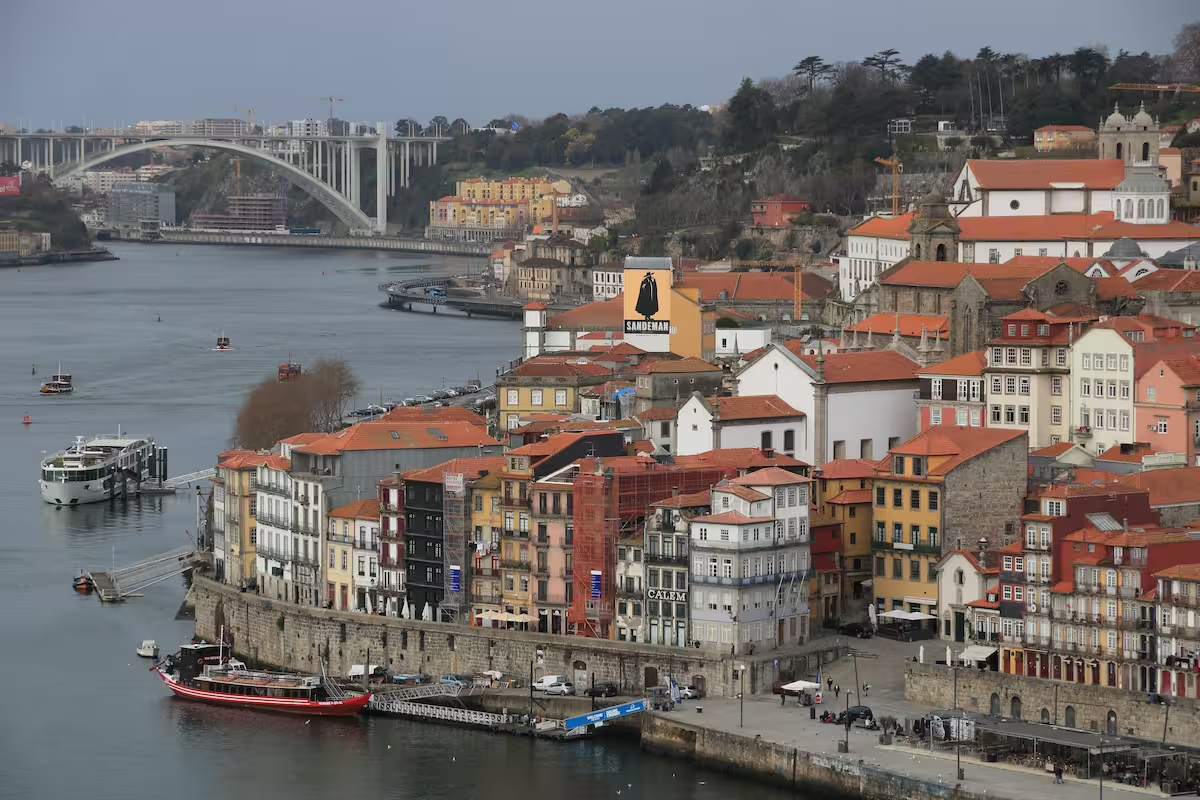
Before you set off, do yourself a favour: spend at least one day in Porto. It's a spectacular city. Cross the Dom Luís I Bridge, sip a glass of vinho verde on a terrace in the Ribeira district, eat a francesinha (trust me, you'll need the calories), and let the city sink in. The Camino starts long before you set foot in Galicia, and Porto deserves that first relaxed step.
Plus, it's the best way to arrive fresh at the start of the route. Many pilgrims arrive a day early, explore the city, and head to bed early for a dawn start. Others stay two days. My advice: arrive a day early, rest, get to know the city, and start the next day with energy.
Here's what makes Porto the best option:
- Cheap flights from all over Europe and the Americas. Ryanair, EasyJet, Vueling, TAP, Transavia, Delta, United, Jet2… Over 50 cities connected directly.
- Francisco Sá Carneiro Airport (OPO) is 15 minutes from the city centre by metro. Cheaper than any taxi in Madrid.
- Direct train to Valença (the border). From Porto, in two hours you're at Valença do Minho. Cross the pedestrian bridge over the Miño river and you're in Tui, standing on the Camino.
- The city is affordable. Food, accommodation, transport — everything is cheaper than Madrid or Santiago.
- The Portuguese Way is stunning. It winds through green landscapes, charming villages, estuaries and forests. Many people find it even more beautiful than the French Way.
📊 Madrid vs Porto: side by side
| Factor | Via Madrid (traditional) | Via Porto (smart) |
|---|---|---|
| Total flight + transfer time | 9 to 12 hours | 3 to 5 hours |
| Estimated cost (transport to start of Camino) | €62 bus Madrid-Santiago / €80 AVE | €8-12 train Porto-Valença |
| Travel stress | High: queues, transfers, tight schedules | Minimal: no-reservation train, direct |
| Can you visit TWO countries? | No | Yes: Portugal + Spain |
| Can you start walking the same day? | Only if you arrive very early | Yes, you reach Valença before lunch |
| Connection to the Camino | 9h bus or AVE to Santiago + bus to Sarria | Train Porto to Valença + cross the bridge (300 m walk) and you're in Tui |
The bottom line: Via Porto you save 5-7 hours of travel, €50-70 in transfers, and you arrive more rested. No contest.
🛩️ Direct flights by country
Porto has direct flights from over 50 cities worldwide. Here are the main connections by country, with airlines and estimated prices for 2026. Prices are estimates for shoulder season (spring/autumn).
| Country | Cities with direct flights | Airlines | Estimated price (one way) | Duration |
|---|---|---|---|---|
| 🇪🇸 Spain | Barcelona, Madrid, Málaga, Palma, Tenerife, Valencia, Seville, Bilbao | Ryanair, Vueling, Iberia | €25-80 | 1h 30min - 2h |
| 🇬🇧 United Kingdom | London (LGW, STN, LTN), Bristol, Birmingham, Manchester, Liverpool, Edinburgh | Ryanair, EasyJet, Jet2, BA | €20-60 | 2h - 2h 30min |
| 🇩🇪 Germany | Frankfurt, Berlin, Munich, Hamburg, Düsseldorf, Cologne, Stuttgart | Ryanair, Lufthansa, Eurowings | €30-80 | 2h 30min - 3h |
| 🇫🇷 France | Paris (ORY, CDG), Lyon, Marseille, Nice, Toulouse, Bordeaux, Lille, Nantes, Strasbourg | Ryanair, EasyJet, Transavia, Air France | €20-70 | 1h 45min - 2h 15min |
| 🇮🇹 Italy | Rome, Milan (BGY, MXP), Bergamo, Venice, Bologna, Naples, Pisa, Catania | Ryanair, EasyJet, Wizz Air, ITA | €25-75 | 2h 30min - 3h |
| 🇵🇹 Portugal | Lisbon, Funchal, Ponta Delgada, Faro | TAP, Ryanair, EasyJet | €20-50 | 45min - 2h |
| 🇳🇱 Netherlands | Amsterdam, Eindhoven | KLM, Ryanair, Transavia | €30-80 | 2h 30min |
| 🇧🇪 Belgium | Brussels, Charleroi | Ryanair, Brussels Airlines | €25-60 | 2h 30min |
| 🇨🇭 Switzerland | Zurich, Geneva, Basel | EasyJet, Swiss, Ryanair | €30-80 | 2h - 2h 30min |
| 🇺🇸 United States | New York (JFK, EWR), Boston, Miami | TAP, Delta, United, Azores Airlines | $300-600 | 6h - 7h 30min |
| 🇨🇦 Canada | Toronto, Montreal | TAP, Air Canada | $400-700 | 6h 30min - 8h |
| 🇧🇷 Brazil | São Paulo, Rio de Janeiro, Brasília, Belo Horizonte | TAP, Azul, LATAM | R$1500-3000 | 8h - 10h |
| 🇯🇵 Japan / 🇨🇳 China / 🇰🇷 Korea | Tokyo (NRT), Osaka (KIX), Beijing, Shanghai, Seoul (ICN) | TAP, ANA, Air China, Korean Air, Asiana | $500-1200 | 12h - 16h (1 stop) |
Prices are estimates. For up-to-date prices, check Skyscanner or Google Flights with origin and destination "OPO".
🚆 How to get from Porto to Tui
Once you land in Porto, you have three options to reach Tui — the first Galician town on the border and the starting point of the Portuguese Way from the last 100 km.
🚆 Option 1: Regional train (recommended)
Price: €8-12 one way.
Duration: 1h 45min - 2h 10min.
Departure: Porto-Campanhã or Porto-São Bento stations.
Arrival: Tui station (actually Valença do Minho — see below).
Frequency: 5-6 trains daily.
The regional train is the best value option. No reservation needed — buy your ticket at the station or on the Comboios de Portugal website. The journey runs alongside the Miño river and is quite scenic.
From the airport: Metro line E (purple) from the airport to Campanhã station. 30 minutes, €2-3.
🚌 Option 2: Bus
Price: €12-18.
Duration: 2h 30min - 3h.
Companies: Alsa, Autna, FlixBus.
Departure: Porto bus station (next to Campanhã).
The bus is slower and less comfortable than the train but runs more frequently. Some buses drop you in Tui, others in Valença do Minho (on the Portuguese side of the border). If you end up in Valença, just walk across the international bridge into Tui.
🚗 Option 3: Ride-share (BlaBlaCar)
Price: €8-15.
Duration: 1h 30min.
Platform: BlaBlaCar.
Porto-Tui is a very popular BlaBlaCar route. It's faster, you meet people, and it's usually cheaper than the bus. Ideal if you're travelling solo.
A quick note on the train: the regional service actually terminates at Valença do Minho in Portugal, not Tui in Spain. But Valença and Tui are the same town split by the Miño river. When you get off the train, just walk across the pedestrian bridge (about 300 metres) and you're in Tui, standing right on the Camino. You can't miss it.
My personal recommendation: if you have time, stop at São Bento station just to see its stunning azulejo tile murals. It's one of the most beautiful train stations in the world. Then take the urban train to Campanhã (they run every 10-15 minutes) to catch the regional service to Valença.
🥾 Stages of the Central Portuguese Way (Porto → Santiago)
The Central Portuguese Way from Porto to Santiago is approximately 240 km. Comfortably done in 10-12 days walking or 4-6 by bike.
| Stage | Route | Distance | Difficulty | Recommended hostel |
|---|---|---|---|---|
| 1 | Porto → Vairão | 23 km | Easy | Albergue de Vairão |
| 2 | Vairão → Barcelos | 27 km | Moderate | Albergue de Barcelos |
| 3 | Barcelos → Ponte de Lima | 33 km | Challenging | Albergue Ponte de Lima |
| 4 | Ponte de Lima → Rubiães | 18 km | Moderate | Albergue de Rubiães |
| 5 | Rubiães → Tui | 20 km | Moderate | Ideas Peregrinas (Tui) |
| 6 | Tui → O Porriño | 17 km | Easy | Albergue A Pedra |
| 7 | O Porriño → Redondela | 16 km | Easy | Albergue Redondela |
| 8 | Redondela → Pontevedra | 19 km | Easy | Albergue Aloxa |
| 9 | Pontevedra → Caldas de Reis | 23 km | Moderate | Albergue Caldas de Reis |
| 10 | Caldas de Reis → Padrón | 18 km | Easy | Albergue de Padrón |
| 11 | Padrón → Santiago de Compostela | 25 km | Easy | Santiago de Compostela |
Note on the last 100 km: If your goal is to earn the Compostela (the official certificate of completion), the last 100 km start in Tui (stage 6). You can skip the first 5 stages from Porto and start directly in Tui by taking the train from Porto. The Tui → Santiago section is about 118 km — perfect for the credential requirements.
For cyclists: The Compostela requires 200 km by bike. The total distance from Porto (240 km) covers this comfortably. A good plan is to split the route into 5-6 stages, adjusting the daily distance to your rhythm (e.g.: Porto → Barcelos, Barcelos → Ponte de Lima, Ponte de Lima → Tui, Tui → Pontevedra, Pontevedra → Padrón, Padrón → Santiago).
📍 In Porto: At Porto Cathedral (Sé). They usually sell it for €2. Some people also get it at the Tourist Office.
📍 In Tui: At Tui Cathedral, the Tourist Office, or some friends of the Camino associations. Once you have it, remember to ask for your first stamp (sello) at Porto Cathedral or the first albergue where you spend the night — that officially marks the start of your route.
🚴 Cycling the Camino from Porto
A few years back, when my legs were still fresh and my back didn't remind me of its existence with every step, I was a cycling fanatic. I rode every Camino route: the French Way from Roncesvalles, the Via de la Plata from Seville, the Portuguese Way from Lisbon… But the one I repeated most was Porto. Why? Because it's easy. You get to Porto by bus or train and within hours you're pedalling back towards Santiago. The terrain is gentle — some climbs, but nothing mountainous. It's perfectly doable with kids. In my opinion, it's the first choice, even better than walking: arrive in Porto, get on a bike, and pedal. In 5-6 days you're in Santiago.
The Portuguese Way from Porto — especially if you take the coastal detour — is one of the most beautiful routes I've ever ridden. Green hills, fishing villages, forests, and the sound of the Atlantic Ocean in the background. And then there's Portuguese food: a delight. A glass of vinho verde on a terrace, fresh sardines (sardinha assada), or a pastel de nata. All at very affordable prices, much cheaper than Spain.
Rental companies (a reference, not the only one)
- Turisbike — Rental in Porto with delivery to your accommodation and pickup in Santiago. Bikes equipped for long-distance, luggage transfer and roadside assistance. It's one option, but as I said, there are many more.
Important tips for cyclists: Getting a flat tyre is more common than you'd think. Make sure the company gives you a basic repair kit or offers roadside assistance. Insist on a helmet and reflective clothing. The Camino has many sections shared with cars and bikes, and road safety isn't optional. Getting hit by a car on a blind curve can ruin your trip — and much more.
🏠 Where to stay (straight talk with a plan B)
Let's be clear: accommodation on the Camino isn't what it used to be. In the old days, you'd show up, ask, and there'd be a bed. Now, from Tui to Santiago, the public albergues (Xunta-run hostels, those €10 no-reservation ones) are a lottery. They fill up fast, and if you arrive late, you're staring at a locked door. And no, I'm not exaggerating. In high season (May to September), it's a battle. That's why my first piece of advice is this: if you start in Tui, don't assume there'll be a bed at the public albergue. Always have a plan B.
What about the Porto to Tui section? Honestly, I know it less well. I've cycled it, but I don't have the same accommodation experience as I do on the Galician stretch. So here I'll give you the tools, not a fixed list. Lists go out of date; what you need is to know where to look.
Good news: the towns are close together. If you can't find a bed in one place, the next town is usually within easy reach. That's a huge relief. Not like the French Way, where you'd arrive somewhere and the next town was 15 km away. Here, the villages are near each other. Even if you need to detour a couple of kilometres to find a bed, it's not a big deal. That little adventure of looking for a plan B is part of the Camino — trust me.
📌 Best tools for finding accommodation
For up-to-date listings (with prices, phone numbers, and whether they take reservations), I use two trusted sites:
- Gronze.com → The most complete for the Portuguese Way. Maps, stages and accommodation.
- AlberguesCaminoSantiago.com → A simple search tool by stage and type of hostel.
That's where you'll find reliable info stage by stage. Don't trust old lists.
📋 Accommodation table: Porto → Santiago (indicative examples)
Here's a rough guide to the most common accommodation at each stage. From Porto to Tui, most albergues are private (public ones are scarce). From Tui to Santiago, you'll find a mix of public and private.
| Stage | Route | Distance | Public albergues (no reservation) | Private albergues (reservation recommended) |
|---|---|---|---|---|
| 1 | Porto → Vairão | 23 km | Not available | Albergue de Vairão (€12-15) |
| 2 | Vairão → Barcelos | 27 km | Not available | Albergue de Barcelos (€10-12) |
| 3 | Barcelos → Ponte de Lima | 33 km | Not available | Albergue Ponte de Lima (€12-15) |
| 4 | Ponte de Lima → Rubiães | 18 km | Not available | Albergue de Rubiães (€8-10) |
| 5 | Rubiães → Tui | 20 km | Not available | Ideas Peregrinas (€18-22) |
| 6 | Tui → O Porriño | 17 km | Tui Pilgrim Albergue (€10, priority to walkers) | A Troita Hostel (€19-22), Albergue A Pedra (€15) |
| 7 | O Porriño → Redondela | 16 km | O Porriño Pilgrim Albergue (€10) | Albergue Camino Santiago Porriño (€17) |
| 8 | Redondela → Pontevedra | 19 km | Redondela Pilgrim Albergue (€10) | Albergue A Conserveira (€15-17), Albergue Avoa Regina (€17-19) |
| 9 | Pontevedra → Caldas de Reis | 23 km | Pontevedra Pilgrim Albergue (€10) | Albergue A Ponte de Santiago (€12-15), Pensión Maruja (€20-30) |
| 10 | Caldas de Reis → Padrón | 18 km | Caldas de Reis Pilgrim Albergue (€10) | Albergue Silleiro (€15), Albergue O Cruceiro (€14-16) |
| 11 | Padrón → Santiago | 25 km | Padrón Pilgrim Albergue (€10) | Albergue Corredoiras (€15), Albergue Xacobeo (€12-15) |
My final advice in three sentences: 1. Always have a plan B, especially in Tui. 2. Public albergues without reservation are a risk in high season. 3. The closeness of the towns lets you improvise, but don't push your luck. And remember: if you're on a bike, you have a lot more freedom to move between stages.
🚌 Getting back: Santiago to Porto (stress-free)
You've made it to Santiago. You've seen the Cathedral, hugged the Apostle (if that's your thing), and the only tiredness you feel is in your legs — not in your head from bad travel planning. Now it's time to think about getting back. Don't worry — there are plenty of options from Santiago to Porto to suit any budget or schedule.
🚍 Recommended option: Direct bus (point to point)
This is the most comfortable, cheapest and fastest way. Buses leave from Santiago's Intermodal Station (Rúa de Clara Campoamor, s/n, next to the train station) and drop you in central Porto (Campanhã) or at the airport (OPO) if you need to catch a flight. Frequencies are high and prices are reasonable if you book ahead, but even buying on the day won't break the bank.
| Company | Estimated price | Duration | Frequency | Official website |
|---|---|---|---|---|
| FlixBus | From €15-18 (promo) / €25-35 (standard) | 3h 10min - 3h 30min | Multiple daily (up to 11-13 services) | flixbus.com |
| Alsa | €19-35 (depending on day and advance booking) | 1h 59min (direct) up to 3h 30min (with stops) | 12-16 services daily (first at 8:00, last at 22:00) | alsa.com |
| Autna | €18-28 | Around 3h (with stops in Vigo and Tui) | 2-3 services daily | autna.com |
| BlaBlaCar Bus | €19-25 | 3h 20min | 1-2 services daily | blablacar.com/bus |
Important detail: Buses drop you at Campanhã intermodal terminal (train and metro connections), and many also stop at Francisco Sá Carneiro Airport (OPO). If your flight is in the morning, you can overnight in Porto or look for a night bus (FlixBus sometimes has departures around 20:00-22:00).
🚆 Train: an alternative with a transfer (for rail enthusiasts)
There's no direct train from Santiago to Porto. You need to change in Vigo and frequencies aren't great, but if you love trains, here it is:
- Leg 1 (Renfe): Santiago → Vigo Urzaiz (AVE trains every 2-3 hours, 53 min, €18-25).
- Leg 2 (CP – Comboios de Portugal): Vigo Guixar → Porto Campanhã (international regional trains, 2h 30min, €15-20).
Total estimated cost: €45-70 and 4h 30min - 5h 30min of travel. Not worth it unless you have a rail pass or want the experience. For speed and simplicity, the bus is better.
🌐 Ride-sharing: BlaBlaCar (the cheapest and most social option)
The Santiago–Porto route is one of the busiest for ride-sharing on BlaBlaCar. Lots of Galicians working in Porto and, conversely, Portuguese coming to Santiago. Any day of the week you'll find several offers.
- Average price: €12-18 per seat (much cheaper than the bus).
- Duration: 2h 20min - 2h 45min (the fastest option).
- Bonus: You meet local people, share Camino stories and save a good amount of money.
My advice: Check profiles with good ratings and make sure the driver accepts luggage. It's a very safe option, and if you've never tried it, I encourage you to give it a go.
🚖 And if all else fails… the family taxi (plan Z)
If by some space-time catastrophe all buses are cancelled, there are no trains, and BlaBlaCar is nowhere to be found, remember that my sister Susana's husband is a taxi driver in Santiago. In a pinch, you can call and ask if he can take you.
But I won't lie to you: a taxi from Santiago to Porto (about 230 km) will cost you a pretty penny — no less than €250-300. It's an absolute emergency service. I'm telling you so you don't get a shock.
Here's the family taxi number, use it only if you really need it or if money is no object:
- Taxi Señarís: +34 881 08 25 71 (ask for Susana about the taxi driver).
✅ Smart pilgrim checklist
So you don't forget a thing. Here's what you need to start the Camino from Porto smoothly:
- 🪪 Pilgrim Credential (credencial del peregrino): Get it at Porto Cathedral (Sé) or at the Friends of the Camino de Santiago association (Rua de São Miguel, 4). €2. This is your "passport" — you need it to collect stamps along the way and to receive the Compostela certificate in Santiago.
- 🆔 ID / Passport: Essential for picking up your Compostela at the Pilgrim's Office in Santiago.
- ✈️ Flight to OPO: Francisco Sá Carneiro Airport. Compare on Skyscanner weeks ahead.
- 🚆 Porto → Valença train: Leaves from Campanhã station. No reservation needed — pay at the station. At Valença, cross the pedestrian bridge over the Miño and you're in Tui.
- 🛏️ First night accommodation: Book in Tui in advance if you're arriving in high season.
- 🎒 Travel insurance: Essential. The Camino is safe, but a badly treated blister can stop you in your tracks.
- 💶 Cash (small bills): Public albergues don't take cards, and neither do some small bars. Carry €50-100 in cash.
- 📱 Useful apps: Wise Pilgrim (Portuguese Way), Google Maps offline, CP (Comboios de Portugal) for train schedules.
- 🌤️ Weather: Spring (April-June) and autumn (September-October) are the best seasons. Rain is always possible — bring a waterproof jacket.
- 💰 Daily budget: €30-40/day (albergue €10-15, food €15-20, coffee and extras €5-10).
- 🧴 Sun protection: The sun in Portugal and Galicia is deceptive. Even on cloudy days you can burn.
- 👟 Boots or trainers: If you're doing the whole Camino from Porto, wear comfortable, already broken-in footwear. Don't wear new boots.
- 🔋 Power bank: The stages are long and your phone battery drains fast. Don't run out of juice for apps or your camera.
❓ Frequently asked questions about the Camino from Porto
Is it worth flying to Porto instead of Madrid?
Absolutely. Flying to Porto is cheaper, there are direct flights from dozens of cities, and you can catch the train to Tui for €10. Within three hours of landing, you're wearing your walking boots. Madrid means a 9-hour bus detour or an expensive AVE train.
How much is the train from Porto to Tui?
The regional train from Campanhã costs between €8-12 and takes about two hours. No reservation needed — buy your ticket at the station and hop on. Important: the train terminates at Valença do Minho (Portugal), not Tui. But Valença and Tui are the same town split by the Miño river. Get off the train, cross the pedestrian bridge (about 300 metres) and you're in Tui, standing on the Camino. You can't miss it.
Can you cycle the Portuguese Way?
Absolutely. By bike the route is very manageable: 4-6 days to Santiago, the terrain isn't tough, and the 240 km easily covers the 200 km needed for the Compostela. There are bike rental companies with one-way drop-off in Santiago — I've left one reference, but shop around and compare.
How many days from Porto to Santiago?
Walking: 10-12 days (240 km). By bike: 4-6 days. If you only want to do the last 100 km for the Compostela, start in Tui: 4-5 days walking and you arrive just as fresh.
Is there a bus back from Santiago to Porto?
Yes, and plenty of them. FlixBus, Alsa and Autna run direct services several times a day from Santiago's intermodal station. Prices from €15-25 and about 3 hours. BlaBlaCar also works very well on this route.
Where do I get the Pilgrim Credential in Porto?
At Porto Cathedral (the Sé) or at the Friends of the Camino de Santiago association on Rua de São Miguel, 4. It costs about €2. Don't forget to ask for your first stamp at the Cathedral itself.
What's the best time of year to walk the Portuguese Way?
Spring (April-June) and autumn (September-October). Temperatures are mild, it rains less than in winter, and there are fewer pilgrims than in July-August. If you can, avoid high summer: it gets hot on the exposed stages.
Is it safe to walk the Portuguese Way alone?
Very safe. Portugal and Spain are peaceful countries, the Camino is well-travelled, and you'll always find company. Standard precautions apply: keep an eye on your belongings in albergues, carry enough water, and that's about it.
🍔 Made it to Santiago? We're waiting
After 240 km from Porto, 118 km from Tui, or however many kilometres you've walked, you deserve a good burger or a coffee (there, I said it — I'll stop writing guides and get back to work 😉). We're at Av. de Quiroga Palacios, 5, a 15-minute walk from the Cathedral.
How to find Señarís📥 Portuguese Way Guide 2026
Stage table, Porto-Tui connections, accommodation and checklist
I hope this guide helps you on your journey. Buen Camino, pilgrim.
📚 More guides you might find useful:
- 🥾 Stages of the Camino from Sarria
- 🎒 Practical tips for the Camino
- 📖 Camino curiosities and stories
- 🍔 Pilgrim Menu at Señarís

Antonio
Hamburguesería Señarís, Santiago de Compostela