✨ St. John's Night in Galicia 2026: Jump over Bonfires, Taste the Queimada & Feel the Magic
📋 Table of Contents
📥 San Xoán Guide 2026
Queimada recipe · 7 herbs · Schedule · How to get there & more
The night of 23–24 June is the shortest and most magical night of the year in Galicia. San Xoán (Saint John in Galician), the summer solstice, is celebrated with bonfires on the beach, jumps over the flames, queimada ceremonies that ward off the meigas (supernatural beings from Galician folklore, a mix of witches and spirits), and midnight swims that purify both body and soul. Every town and city has its own tradition, but in all of them, fire and festivity blend together until daybreak.
I have lived through many San Xoán nights, especially on Riazor beach in A Coruña, and I can tell you it is a one-of-a-kind experience. Thousands of people sharing wine, jumping over bonfires, and wishing that the new year just beginning will bring them good luck. In this article, I will tell you how it is celebrated in the main Galician cities, the rituals you cannot miss, and the tips to make the night unforgettable (and safe).
⚠️ Key date: 23 June 2026 (night) – public holiday on the 24th
San Xoán night runs from 23 to 24 June. The 24th is a public holiday across Galicia (St. John's Day). Many people also take Friday the 26th off for a long weekend. If you are coming from outside Galicia, book your accommodation now — the cities fill up fast.
🔥 Celebrations by location: from Riazor to the Roman Wall
Every corner of Galicia has its own way of honouring San Xoán. Here is a rundown of the most iconic spots:
🏖️ A Coruña – Riazor and Orzán beaches (the biggest gathering)
Where: Riazor and Orzán beaches.
When: From the afternoon of 23 June until sunrise.
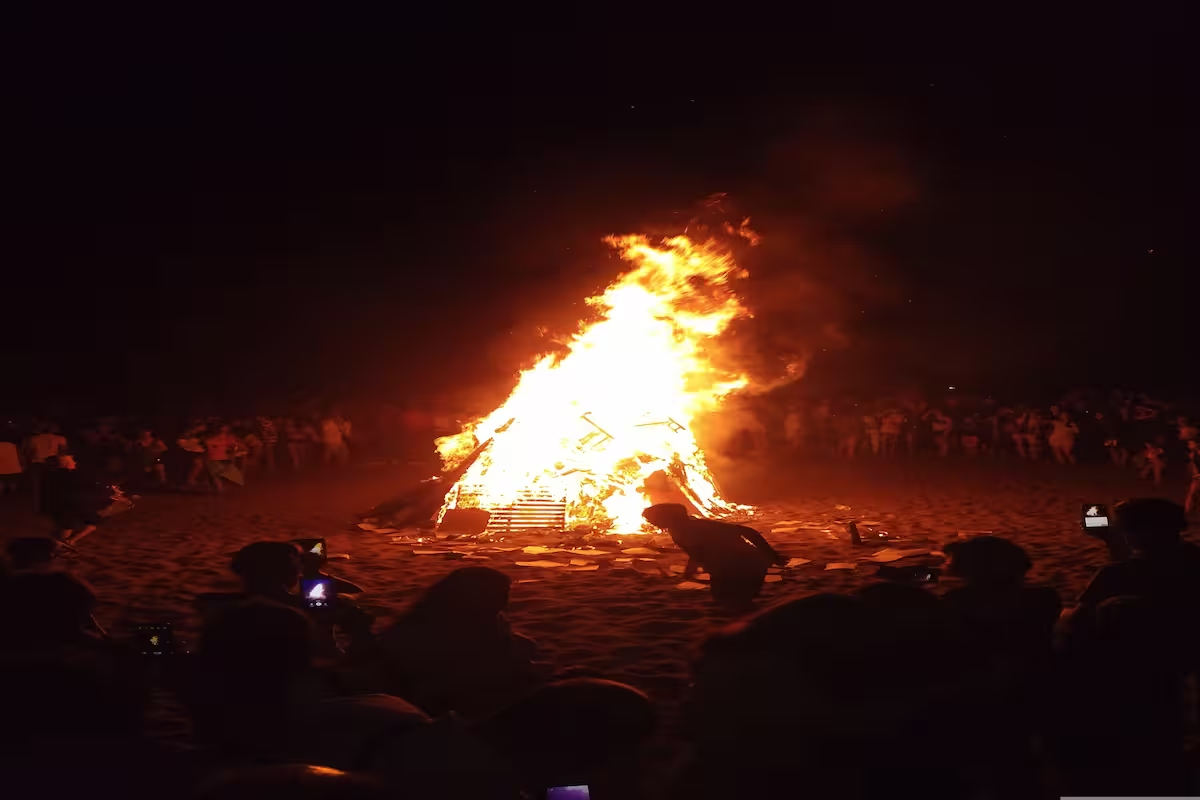
With over 150,000 people, this is the largest celebration in Galicia. The beach turns into a sea of bonfires, people jump over the flames (legend says you must jump nine times or make a wish with each jump), drink calimocho (red wine mixed with cola — "kalimotxo" in Basque, wildly popular across Spain), and eat grilled sardines. At midnight, a giant official bonfire burns the "meigallos" — effigies that represent the bad things of the past year.
⛪ Santiago de Compostela – Queimada and magic in the old town
Where: Squares of the historic centre and Belvís Park.
When: From the night of 23 June, with dancing and queimadas in the squares.
In Santiago, the magic gathers in the squares. People cluster around earthenware cauldrons of queimada while the spell is recited in Galician and the blue flame lights up their faces. There are bonfires in the Alameda park and in Belvís Park (right next to our restaurant). It is a more family-friendly and less crowded night than in A Coruña, but just as special.
Local tip: Head to the Belvís area or the squares around the Cathedral to experience the queimada with the locals. And if you get tired, you can always come by Señarís for a drink — we stay open late that night.
🏛️ Lugo – Bonfires by the Roman walls
Where: Parks and city walls.
When: Night of 23 June.
In Lugo, bonfires are lit in various spots around the city, especially near the remarkably preserved Roman walls (a UNESCO World Heritage Site). It is a more intimate celebration, but deeply rooted. People dine al fresco and then hop from bonfire to bonfire through the neighbourhoods.
🌊 Vigo – Samil and other beaches
When: Night of 23 June.
Samil beach also hosts a large celebration with bonfires and sardines. It is the second-biggest gathering after A Coruña. In the old quarter (Casco Vello), queimadas are prepared and there is traditional dancing in the streets.
🌉 Pontevedra – Rúa do Pasantería and Lérez riverside
Pontevedra's historic neighbourhoods come alive with festivities. The highlight is the "Fogueira do Pasantería", a bonfire organised by local residents with music and a communal dinner. There are also celebrations along the banks of the Lérez River.
♨️ Ourense – Hot springs and queimada
In Ourense, San Xoán night blends with outdoor thermal baths. Some pools open at night, and people bathe under the stars while queimadas are prepared on the banks of the Miño River.
🌍 Villages and rural parishes: the purest tradition
If you want authenticity, head to a village. There, bonfires are lit at stone crossroads (cruceiros) or in churchyards. Neighbours gather wood for weeks, grill sardines, and dance to the sound of gaitas until dawn. No crowds — ideal if you are coming with young children.
🌿 Rituals and traditions: fire jumps, meigas and the midnight swim
San Xoán is so much more than a party. It is packed with symbols and rituals meant to purify and attract good luck:
🔥 Jumping over the bonfire
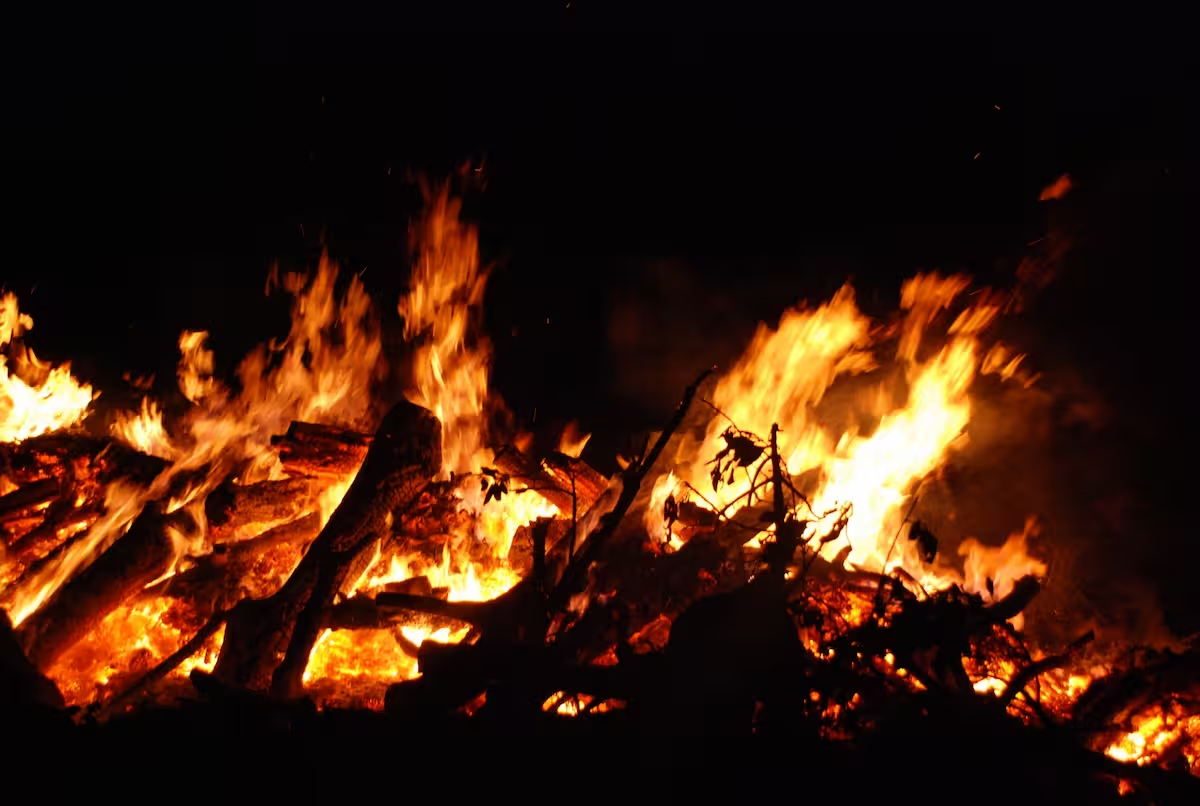
The most widespread tradition: jump over the fire at the stroke of midnight. It is said you must jump nine times (or an odd number) and make a wish with each jump. Others believe the jump drives away the meigas and cleanses the bad energy accumulated over the year.
🌊 Midnight swim in the sea
In coastal towns, swimming in the sea at midnight is a purification ritual. The water on San Xoán night is believed to have healing properties, and the swim guarantees health and beauty for the whole year ahead.
🔥 Burning the "meigallos"
These are rag or wooden effigies that symbolise everything bad from the past year. People write their troubles on them or tie old objects to them, then throw them into the fire to be "reborn" from the ashes.
🌿 "Ramar a casa" – The croques (foxglove branches) of San Xoán
Another tradition very much alive in the villages around Trazo and inland parishes is that of "ramar a casa" (Galician for "decorating the house with branches"). Bunches of a very special plant, the Digitalis purpurea (common foxglove), are placed at doors and windows to keep the meigas out on the most magical night of the year. In Galician this plant goes by many names: sanxoáns, estalotes, abeluria, croques, dedaleira... The name "estalotes" comes from the sound the flowers make when you pop them between your hands — something we did constantly as kids. It is also one of the seven herbs used for San Xoán water.
🌿 Water from 7 springs and the herbs of San Xoán
Tradition dictates that you gather herbs from the countryside such as fennel, rosemary, St. John's wort (hypericum), mallow, lemon verbena, broom, and fern. They are placed in a container with water collected from seven different springs and left out overnight under the "sereno" (the night dew). The next morning, you wash your face with this water without looking in the mirror. In Galician this is called "facer o cacho" — one of the oldest rituals of San Xoán night in Galicia.
🥃 The queimada and the Galician spell
There is no San Xoán without queimada. The magic drink made from aguardiente (a Galician pomace brandy, similar to Italian grappa), sugar, lemon peel, and coffee beans is prepared in earthenware cauldrons, set alight, and the blue flame is said to burn away evil spirits. While it burns, someone recites the spell against the meigas, their voice growing louder and more intense. You simply must experience it at least once in your life.
While researching this article, I looked into the history of the spell in depth and was saddened to learn that Mariano Marcos Abalo passed away in Vigo on 7 February 2022, at the age of 85. And while courtesy does not cancel out courage — and we have enough on our plate paying our taxes without also risking copyright infringement — I want to make it clear that this is not a criticism. Quite the opposite. This man, a bank employee who wrote a few verses for a gathering of friends, elevated a tradition into something sublime and memorable that today represents Galicia around the world. Every queimada that is lit, every spell that is recited, carries his signature even if no one knows it. So from here: all our gratitude and respect to Mariano Marcos Abalo. May he rest in peace.
📜 Excerpt from the queimada spell
"Mouchos, curuxas, sapos e bruxas. Demos, trasnos e diaños, espíritos das negras sombras…"
(The opening lines — roughly: "Owls, screech owls, toads and witches. Demons, goblins and devils, spirits of the black shadows...")
We cannot reproduce the full spell here for legal reasons — it has been copyrighted since 2001. Not out of fear, because Don Mariano never took anyone to court, but because as website operators we have to follow the rules. But this excerpt already gives you a sense of the tone. That was Don Mariano's intention: for people to gather, share, and enjoy. So now you know: visit Galicia on the night of 23 June and join the celebration.
📅 Schedule and key dates for 2026
📅 Tuesday, 23 June – San Xoán Night
10:00 PM – 12:00 AM – Communal dinner (sardines, meat, wine).
12:00 AM (midnight) – Fire jumping and burning of the meigallos.
12:00 – 2:00 AM – Midnight swim in the sea (at beaches).
2:00 – 6:00 AM – Dancing and queimadas until sunrise.
📅 Wednesday, 24 June – St. John's Day (public holiday across Galicia)
Noon – Family lunches.
Afternoon – Some towns hold fairs or children play with "festicos" (plant pods used as poppers).
✈️ Coming from abroad? Recommended long weekend
The 24th is a public holiday, and you can also take Friday 26th off. That gives you from 20 June (Saturday) to 28 June (Sunday). Book your hotel now, especially in A Coruña — it sells out fast.
💡 A local's tips for surviving the night
- Arrive early (around 8:00 PM) at the beach if you want a spot for your own bonfire.
- Do not bring glass containers to the sand. In A Coruña it is prohibited and you can be fined (broken glass is dangerous). Bring cans or plastic.
- Do not swim if you have been drinking and avoid unpatrolled areas. There are scares every year.
- Bring some food to share: empanada (Galician savoury pie), bread, cheese, chorizo. Sharing is part of the celebration.
- Easy calimocho: red wine + cola + ice. The drink of the night — you will find it everywhere.
- If coming with children, find a small bonfire in a neighbourhood or village — safer and more family-friendly.
- Check the weather forecast. It can rain in Galicia, although San Xoán is usually fine. Bring a rain jacket just in case.
🎯 Plan your San Xoán step by step
If it is your first time, here is a simple plan:
- Late afternoon of the 23rd: Head to your chosen beach or square to watch the bonfires being set up.
- Dinner (9:00 – 11:00 PM): Eat at the food stalls or bring your own to share with those around you.
- Midnight: Jump over the fire (carefully!) and if you are at the beach, take a dip (safely!).
- 12:30 – 2:00 AM: Find a queimada ceremony and listen to the spell.
- Until sunrise: Dancing, music, and partying.
- 24 June, morning: Collect your San Xoán herbs from the balcony (if you did the ritual) and wash your face with the water. Rest and eat something good.
🍔 Need to refuel after the night?
On 24 June we open our restaurant from 1:00 PM. Come by and tell us how it went, and grab a burger (or a hangover queimada). We are at Av. de Quiroga Palacios, 5, a 10-minute walk from the old town.
How to get to Señarís❓ Frequently asked questions about San Xoán in Galicia
Is it dangerous to jump over the bonfires?
It can be if you are not careful. Only jump over small fires when the flames are no longer high. The big ones are usually supervised by firefighters. Do not do it if you have been drinking.
Can I go with young children?
Yes, but avoid the overcrowded beaches. Look for a village or neighbourhood where the fires are smaller and more controlled. Kids also love the herb ritual.
Where is the best place to see the official bonfire in A Coruña?
The big bonfire is lit near the promenade, level with the football roundabout (rotonda de futbolín). Any spot on Riazor or Orzán offers good visibility, but the earlier you arrive, the better your spot.
Do I need to pay for anything?
Everything is free. Queimada may be sold at some stalls (3-5€ per glass). Parking is very difficult, so use public transport or walk.
Can I bring food and drink?
Yes, that is perfectly normal. But avoid glass and bring bags to collect your rubbish. The beach is usually very dirty the next morning — let us all do our part to change that.
I hope this guide helps you have an unforgettable San Xoán night. If you have any questions, drop us a line. And if you are passing through Santiago those days, come by and tell us about your experience. Boas festas e que as meigas non che fagan dano! (Happy festivities, and may the meigas do you no harm!)
📚 More articles you might like:
- 🎆 Apostle Santiago Festivals 2026: Complete Guide
- 🎭 Galician Cultural Festivals Month by Month
- 🍽️ Galician Gastronomic Festivals 2026
- 🥘 Pilgrim Menu at Señarís
Antonio
Hamburguesería Señarís, Santiago